Sunday, October 29, 2006

Facebook, the new means of communication

Facebook, created by Mark Zuckerberg, on February 4th, 2004, is a online social networking website that connects millions of people worldwide. (http://en.wikipedia.org/wiki/Facebook) Originally the site was only open to US colleges, but it has slowly expanded to Canadian Universities, High Schools, and now world wide regions. It allows people from all schools, and areas, to be like an online community. You can share photos, leave messages on their walls, have information about yourself, etc. It pretty much allows you to communicate with everyone, or anyone you allow to view your profile. It has become the new mode of communication among young adults and teenagers

What happened to the days where you actually had to leave your bedroom or house to talk to a friend? Or even using your phone to talk to them? Those days are no longer. Now with the internet, websites like Facebook are allowing people to communicate with others without leaving their computer screen. I relate this to the quote said by Rachel Qitsualik in the article “Technology and the Circumpolar Village,” on page 147 in the courseware. She says, “For the hamlet is the new iglu, and the Internet is the new land.” In my opinion Facebook is the new land, and it has replaced the old land. Instead of communicating face to face with someone, it is now mainly done behind a computer screen. Facebook and other similar sites are slowly taking the lead in new forms of communication.

The question you have to ask yourself is, “Is this new way of communicating with others an improvement? Or is it actually negatively affecting our society?”
Sample facebook page:


(http://en.wikipedia.org/wiki/Facebook)
(Introduction to Communication Custom Courseware)
(http://www.seomoz.org/images/articles/web20_awards/screenshots/facebook.gif)

Sunday, October 22, 2006

Lobbyists


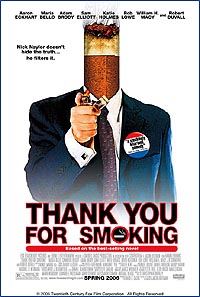
According to www.wikipedia.com lobbying is referred to as, “The practice of attempting to directly influence the actions of government, through various combinations of private cajoling, public actions, and the combination of the two.” I recently watched a movie called, “Thank you for Smoking,” and it is a story based upon a lobbyist for a large tobacco company. Lobbyists these days often use bribes, or threats to get there way, however if this is ignored, lobbyists are excellent at one thing, and this is how to talk. They are excellent at talking to all sorts of people, and that is their one skill that gets them far in that profession. They could be in a situation where they are extremely wrong, and they know that, but they will prove the opposition wrong. They don’t have to prove that they are right, just that the opposition is wrong, therefore proving that the lobbyist has to be right.

I think that lobbyists can relate to some of the characteristics of a competent communicator, as they are skilled at what they do. Lobbyists can exhibit a wide range of behaviors, acting self confident, acting wrong, etc, but they do know when to exhibit them. I also think that lobbyists use empathy to their advantage. They try to see what the opponent is thinking, and feeling, and by doing that they can use their communication skills to benefit their case. This is why I think that lobbyists are excellent communicators and can use language to their advantage.

Adler, Ronald B., and George Rodman. Understanding Human Communication. New York: Oxford, 2006.

http://en.wikipedia.org/wiki/Lobbyist

http://image.ohmynews.com/down/images/1/yamanin_280688_1%5B435292%5D.jpg

Sunday, October 15, 2006

The Word Chate

The word chate according to the website www.urbandictionary.com is defined as, “It can be describing a shitty(bad) situation in the maximum and minimum degree. A situation being a person, place, thing or event.” An example of the use of this word in a sentence is, “That guy chated me on my change.” Chate is a word that was coined after a teenager with the last name “Chater” in Oakville, Ontario. This word is a perfect example of the term “regionalisms,” which is defined as “terms that are understood by people who live in one geographic area but that are incomprehensible to outsiders.” (Ronald B. Adler, Understanding Human Communication)

I grew up in Oakville and this word has been in my vocabulary for many years. We used it in daily conversations there and everyone knew what it meant. When I came to McMaster this year I still used it in conversations, but people had no idea what I was saying to them and would often ask what it meant. When talking to people I wouldn’t realize that they wouldn’t know what it meant, because it was so embedded into my vocabulary. I even forget that it isn’t a real world per say, although I don’t doubt it could become a word soon.

The word chate is a great example of how words can be created and understood in one place, and in another place it could mean nothing, or something completely different. There are several other good examples in the course text book such as “Rapsters knowing the bling bling means jewelry and whip is a nice-looking car.” (Ronald B. Adler, Understanding Human Communication)

Sunday, October 08, 2006

WSIB's Effective Use of Television

When media shows us something that is shocking or causes us to feel some sort of emotion it is most effective. An example of this is WSIB’s new workplace safety prevention commercials. Although very graphic and large inappropriate for the younger crowd, the shock factor that these commercials induce within us really stir mixed emotions. The way the accidents are shown in the commercial are really effective, and the way television is used as the medium is twice as effective. Had these commercials been placed on the radio, or any other sound emitting device without video, we would never be able to picture the extent of what happens to these people. I think that the way they used to TV as the medium was very smart, as opposed to using another form. Even pictures found in a magazine or newspaper wouldn’t do the justice that these commercials do. Seeing firsthand what can occur really disturbs us and even causes me to want to do something about it. After seeing these commercials I was immediately interested and went to check out the site to see what it was about. To me this means that it was very effective. This relates to Marshal Mcluhan’s “the medium is the message.” As well it also relates to the difference between visual and acoustic media. This situation is a great example of visual media is more effective.

The commercials are linked below

http://www.youtube.com/watch?v=u5kiz7GhJt0

and

http://www.youtube.com/watch?v=Qf_LWq88H5I

(I will try and find a way to place them right on the page)

Monday, October 02, 2006

Importance of Analyzing Communication

It is said that 70-90% of communication is non verbal. ("Contract Pricing Reference Guides." Defense Procurement and Acquisition Policy. 19 Mar 2002. 2 Oct 2006 .)This means that when conversing with someone, what they are actually saying verbally only accounts for around 30 percent of what you gather from the entire speech. When communicating with someone you are not only listening to the words, but looking at their facial expressions, body position, hand gestures, the tone of their voice, etc.

A great example of how true the first statement mentioned, can be seen in email or chatting online. When typing to someone you aren’t able to put forth your emotions, tone of voice, or even your facial expressions. They are just reading what you type. When typing something sarcastic to someone you can’t really put emotion into it, and they can’t assume your being sarcastic because they are just reading the words you type. The only way they’d know was if you put “insert sarcasm here,” or something similar.

I think that people started to notice this lack of being able to communicate effectively with chats and emails, which is why I think “emoticons/smileys” were made. They imitate a facial expression. For example if I was to say something that I meant to be funny I could throw in , or if I was angry I could throw in . These simple emoticons help send our message clearly. By seeing these the reader can make more sense of what were saying.

Here’s an example of this:
John says: That band last night was great.
Steve says: Yeah it was amazing alright.

Or

John says: That band last night was great.
Steve says: Yeah it was amazing alright.

From this you can see that you have to look past the words when speaking with others, and that a simple facial expression or change in tone of voice can alter what the speaker is actually saying.

(Emoticons taken from Windows Live Messenger)


Importance of Analyzing Communication

It is said that 70-90% of communication is non verbal. ("Contract Pricing Reference Guides." Defense Procurement and Acquisition Policy. 19 Mar 2002. 2 Oct 2006 .)This means that when conversing with someone, what they are actually saying verbally only accounts for around 30 percent of what you gather from the entire speech. When communicating with someone you are not only listening to the words, but looking at their facial expressions, body position, hand gestures, the tone of their voice, etc.

A great example of how true the first statement mentioned, can be seen in email or chatting online. When typing to someone you aren’t able to put forth your emotions, tone of voice, or even your facial expressions. They are just reading what you type. When typing something sarcastic to someone you can’t really put emotion into it, and they can’t assume your being sarcastic because they are just reading the words you type. The only way they’d know was if you put “insert sarcasm here,” or something similar.

I think that people started to notice this lack of being able to communicate effectively with chats and emails, which is why I think “emoticons/smileys” were made. They imitate a facial expression. For example if I was to say something that I meant to be funny I could throw in
, or if I was angry I could throw in . These simple emoticons help send our message clearly. By seeing these the reader can make more sense of what were saying.

Here’s an example of this:
John says: That band last night was great.
Steve says: Yeah it was amazing alright.

Or

John says: That band last night was great.
Steve says: Yeah it was amazing alright.

From this you can see that you have to look past the words when speaking with others, and that a simple facial expression or change in tone of voice can alter what the speaker is actually saying.